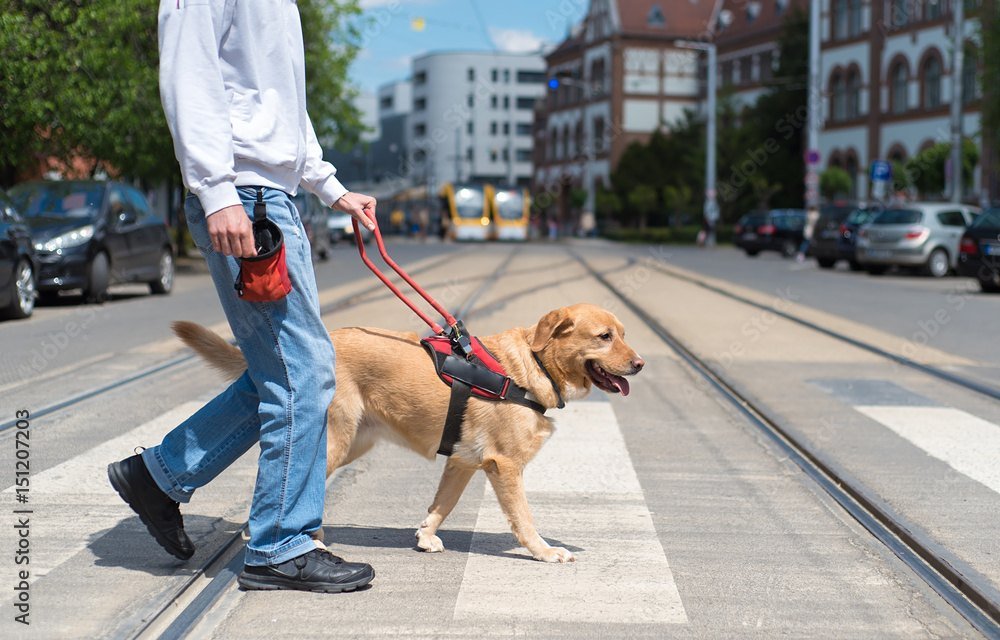
Guide dogs are highly trained partners that support independence and mobility for people who are blind or have low vision. Their role goes beyond navigation — they also provide companionship and confidence in daily life.
Primary mobility aid: helps the handler move safely and independently.
Strong bond: the dog and handler develop deep trust and partnership.
Early training: dogs are trained and socialised from a young age to handle complex environments.
Breeds: Labrador Retrievers, Golden Retrievers and German Shepherds are commonly used.
Not a GPS: a guide dog follows commands but does not decide the route.
Respect while working: never pet, distract or feed a guide dog while it is working — this can put the handler’s safety at risk.
A primary mobility aid for blind and low vision individuals
Requires specialized training for both the dog and the handler
Most common breeds: Labrador Retriever, Golden Retriever, German Shepherd
Represents a unique partnership built on trust and communication
Important: Do not pet or distract a guide dog while working